Where Did People Move to in 2024? Allied's U.S. Migration Report
Each year, Allied Van Lines’ U.S. Migration Report analyzes where people are moving to in the United States. This year, despite years of instability and uncertain job, housing, and economic markets, Americans continue to be on the move. Moves did decrease slightly between 2023 and 2024, with a 7% drop in relocations. However, U.S. migration trends show steady movement toward midsize cities, particularly in the lower-cost-of-living Southeastern states.
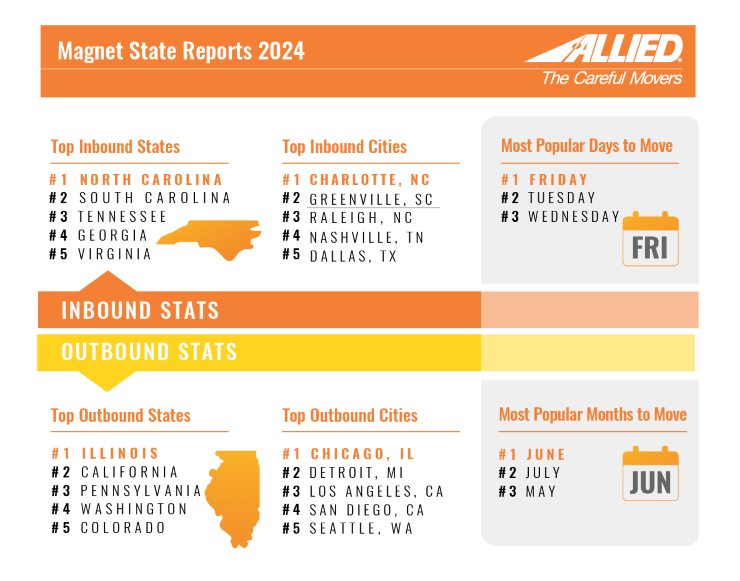
Key Takeaways From the Allied Magnet States Report
- The top inbound states of 2024 include North Carolina, South Carolina, Tennessee, Georgia, and Virginia, with the Carolinas and Tennessee topping the list for three years in a row.
- Top inbound cities include midsize metropolitan areas, including Charlotte, NC, Dallas, TX, Greenville, SC, Nashville, TN, and Raleigh, NC.
- Illinois, California, Pennsylvania, Washington, and Colorado were the top five outbound states, with major metropolitan areas like Chicago, Detroit, Los Angeles, San Diego, and Seattle seeing the most outbound migration. Four of the top five states—Illinois, California, Pennsylvania, and Washington—have made the top outbound states since 2022.
- Inbound analysis shows a trending preference for mid-sized cities that strike a balance between job opportunities and lifestyle preferences, along with affordable housing and stable economies.
- Migration rates dipped again in 2024, likely due to economic uncertainty and fluctuating mortgage rates.
- Even so, those moving tend to prefer minimally disruptive moving dates, with most choosing to move during the summer and toward the end of the week.
Economic Factors and U.S. Migration Patterns
Numerous macro- and micro-economic factors influence where people are moving in the U.S., ranging from the presence of major employers to lower overall housing and living costs.
In spite of the unprecedented shifts to the U.S. migration map over the last few years, one thing remains the same: Americans prefer to move later in the week and during the summer to minimize the disruption to their daily lives.
- Despite a consistent shift toward lower cost-of-living areas and away from metropolises, U.S. migration patterns have slowed since 2021. Numerous factors impact the decision not to move. However, continued high housing prices and uncertainty surrounding mortgage rates may be discouraging some Americans from making a move just yet.
- That said, the data continues to show that residents from large northern cities are flocking to more affordable, economically stable regions in the southeast. From Virginia to the Carolinas, the promise of affordable housing and growing job markets beckons.
- The relocation of major employers from states like California and Illinois may be fueling the year-over-year exodus, especially when coupled with ongoing political, economic, and civil concerns and a higher cost of living.
- Alternatively, the top inbound states have seen an increase in job opportunities and industry over the last few years, with mid-size cities like Greenville, SC, and Raleigh and Charlotte, NC, offering newfound opportunities in manufacturing, finance, and technology.
- Americans prefer to find the most convenient, non-disruptive times to move, meaning most moves happen during peak moving season. The most popular month to move is June, followed by July and May, while the most popular days are
Remote Work and Its Impact on Where People Are Moving in the U.S.
Several decades ago, the idea of a large portion of the workforce working from home — or wherever they wanted — wasn’t an option. But now, after 2020’s COVID-19 pandemic and the economic uncertainties that followed, many businesses have remained largely or completely remote.
At the same time, many employees — who may have commuted to the office five days a week for years — are no longer interested in working 40 hours a week at a corporate office. As a result, remote work and telecommuting have become increasingly commonplace, leading to previously unheard-of flexibility when choosing where to live.
So, how does that impact where Americans are moving in 2024? A study by the Economic Innovation Group noted that expensive areas felt the largest impact from post-pandemic migration patterns. Think New York, Chicago, Los Angeles, and San Francisco’s Bay Area. In areas with higher median home values, population growth saw a steady decline. Alternatively, areas with more affordable housing — or areas historically considered to be vacation destinations — experienced unprecedented growth due to remote or hybrid workers.
Similar studies from the W.E. Upjohn Institute for Employment Research noted the first population increase in rural Midwestern areas in decades following the COVID-19 pandemic and the shift to remote work. Some even began implementing policies, like tax credits for student loan payments, to attract telecommuters.
Inbound U.S. Migration Patterns Insights & Analysis
Explore some of the appealing details behind the cities and states people are moving to in 2024.
South Carolina: Greenville
South Carolina has transformed into a growing epicenter for industry, namely the technology and manufacturing industries. Alongside burgeoning job markets in cities like Greenville, the state offers a stable economy, generally affordable cost of living, and a temperate climate, along with ample coastline for long weekend trips. Booming Greenville combined the amenities of a larger city with the slow pace and lifestyle of a small town, offering a perfect spot for young professionals and families to settle down.
North Carolina: Charlotte and Raleigh
Like its southern neighbor, North Carolina has burst onto the scene as a hot destination. Former vacation towns have experienced an influx of full-time residents with the expansion of remote working, while cities like Charlotte, Raleigh, and Durham prove appealing for those in tech, finance, and healthcare. With an appealing blend of mid-size urban areas and unrivaled natural scenery, the state has something to offer people of all ages.
Tennessee: Nashville
Tennessee, with its sprawling rural areas and vibrant music scene headquartered in Nashville, offers plenty of variety for newcomers to the state. Nashville has also become a hotspot for healthcare and tech startups, resulting in an increase of professionals in the area.
Texas: Dallas
Dallas has had a reputation as a significant economic area for a while. Still, the influx of tech companies and a growing number of IT jobs have lured even more professionals to the area. The warm weather, easy access to outdoor activities, vibrant culture, and lack of state income tax have also contributed to the population boom.
Outbound Migration Analysis
Take a look at some of the factors moving Americans out of these states and major cities.
Illinois: Chicago
High costs of living and tax rates, coupled with the loss of major employers like Caterpillar and Boeing, have driven professionals and families out of the state. In addition, civic concerns and worry about crime rates have made Chicago less appealing.
California: Los Angeles & San Diego
The mass exodus from California points back to numerous factors, ranging from top employers relocating due to high taxes and strict regulations to the soaring cost of living throughout the state.
Pennsylvania
Pennsylvania has a rich industrial and manufacturing history, but offshoring and the relocation of large companies have reduced job opportunities. At the same time, the state economy has been slow to pivot, resulting in fewer jobs.
Colorado
Several years ago, Colorado peaked as a destination for migrating Americans looking for access to the outdoors. Now, the state has made it on the list of top outbound areas, due in part to high costs of living, high tax rates, and job opportunities.
Washington: Seattle
Like California, Washington State and the Seattle area are known as tech hubs. However, increasingly high living expenses and a costly housing market have led to an outbound migration.
Preferred Moving Times in 2024
Our analysis identified numerous shifts in U.S. migration patterns, with one exception: preferred moving times. As a whole, Americans prefer to move during the summer months, with June the top choice, followed by July and May. End-of-week moves are also popular, as shown by Fridays being the preferred day to move, followed by Tuesdays and Wednesdays. The allure of a long weekend move — and minimal disruption to professional and personal routines — continues to be an appealing option to many Americans.