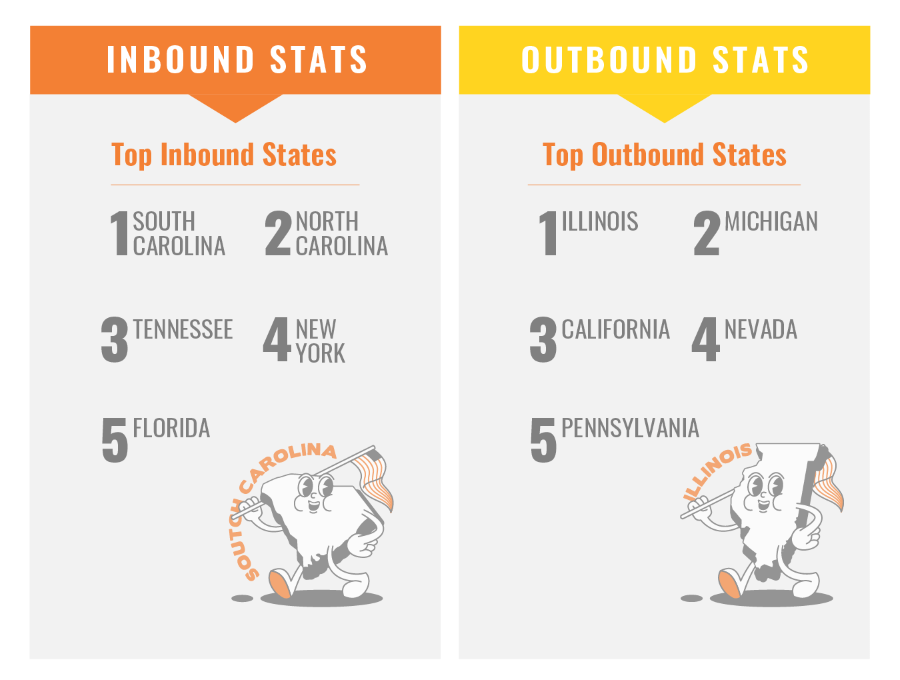

Numerous macro- and micro-economic factors influence where people are moving in the U.S., ranging from the presence of major employers to lower overall housing and living costs. In spite of the unprecedented shifts to the U.S. migration map over the last few years, one thing remains the same: Americans prefer to move later in the week and during the summer to minimize the disruption to their daily lives.
According to the National Association of Realtors, baby boomers now account for 42% of all home buyers. Millennials only make up 29% of buyers, down 9% from 2024. These generational shifts in homeownership mean that the younger generations are holding off from buying homes in popular suburbs. Instead, they are choosing to rent condos and apartments in mid-sized, walkable cities like Charlotte and Boise. These cities offer a high quality of life, similar to San Diego and Seattle, for a fraction of the cost.
Where are Americans moving to? What cities and states are seeing the most migration? Here’s a brief overview of the top cities and states people are moving to in 2025.
South Carolina has transformed into a growing epicenter for industry, namely the technology and manufacturing industries. Alongside burgeoning job markets in cities like Greenville, the state offers a stable economy, generally affordable cost of living, and a temperate climate, along with ample coastline for long weekend trips.
Like its southern neighbor, North Carolina has burst onto the scene as a hot destination. Former vacation towns have experienced an influx of full-time residents with the expansion of remote working, while cities like Charlotte prove appealing for those in tech, finance, and healthcare. With an appealing blend of mid-size urban areas and unrivaled natural scenery, the state has something to offer people of all ages.
Tennessee is an affordable southern state, great for newlyweds, recent college graduates, and retirees. Popular cities such as Nashville are also becoming a hotspot for healthcare and tech startups, resulting in an increase of professionals in the area.
While New York has a much higher cost of living than the other inbound states on this year's list, there are several advantages to moving here. For starters, there are job opportunities in New York City and other nearby states that are a quick train ride commute. The public transportation system makes it easy to live in nearby suburbs, so you don't need to live in a big city to work there. As many big corporations continue to implement return-to-office policies, many working professionals are having to relocate to nearby suburbs to be closer to the city.
The great weather, family attractions, and pristine beaches are just a few reasons Americans are moving to Florida. Florida also doesn't have any state income tax, no tax on retirement income, making it an attractive destination for baby boomers and retirees.
Take a look at some of the factors moving Americans out of these states and major cities.
High costs of living and tax rates, coupled with the loss of major employers like Caterpillar and Boeing, have driven professionals and families out of the state. In addition, concerns about crime rates have made Chicago less appealing.
The mass exodus from California points back to numerous factors, ranging from top employers relocating due to high taxes and strict regulations to the soaring cost of living throughout the state.
Pennsylvania has a rich industrial and manufacturing history, but offshoring and the relocation of large companies have reduced job opportunities. At the same time, the state economy has been slow to pivot, resulting in fewer jobs.
While Michigan has always been an affordable place to live in the Midwest, our U.S. migration trends and data show a significant uptick in outbound movement. Many of the job opportunities in Michigan revolve around the automotive industry. The recent tariffs on automobiles have caused major layoffs at companies such as Ford, General Motors, and Stellantis, forcing some families to relocate to find new opportunities. Other factors, such as the low salaries, weather, and rising cost of living, have also driven people to move.
Nevada has no state income tax and has always been seen as an affordable place to live. However, the rising cost of living and competitive housing market have driven potential homebuyers to look in other nearby states, such as New Mexico and Arizona.
Our analysis identified numerous shifts in U.S. migration trends, with one exception: preferred moving times. As a whole, Americans prefer to move during the summer months, with June the top choice, followed by July and May. End-of-week moves are also popular, as shown by Fridays being the preferred day to move, followed by Tuesdays and Wednesdays. The allure of a long weekend move — and minimal disruption to professional and personal routines — continues to be an appealing option to many Americans.

Planning a long distance move can feel overwhelming, especially when you’re in the early stages. With a to-do list that seems to stretch on forever and countless decisions to make, you may not know where to start. Fortunately, our experienced team at Allied Van Lines is here to help.
Regardless of whether you’re moving locally or planning a cross-country move to one of the top inbound states of 2025, the first step is to create a moving budget. Moving costs can vary dramatically depending on a range of factors, including:
If that seems like a lot to consider, don’t worry. Our knowledgeable Allied Van Lines relocation coordinators can help you create a moving budget and tailor a moving plan to suit your needs. Ready to get started? Contact your local Allied Van Lines today and request a free estimate, or check out our long-distance moving cost calculator.
No matter where people are moving in the U.S., Allied Van Lines will always have you covered. At Allied, we know moving can come with some bumps in the road, even when you’re moving to your dream location. That’s why we’re here and committed to delivering exceptional moving services that allow you to enjoy the journey along the way. We’ve spent nearly a century tailoring our moving services and storage solutions to suit your needs. Get in touch with a local Allied agent today to get started.
Data was provided for all interstate moves that were loaded from January 1, 2016 to December 15, 2025. To maintain comparability with the time frame covered in 2025, only moves loaded by December 15 of each year were included.
Shannon Steinberg